

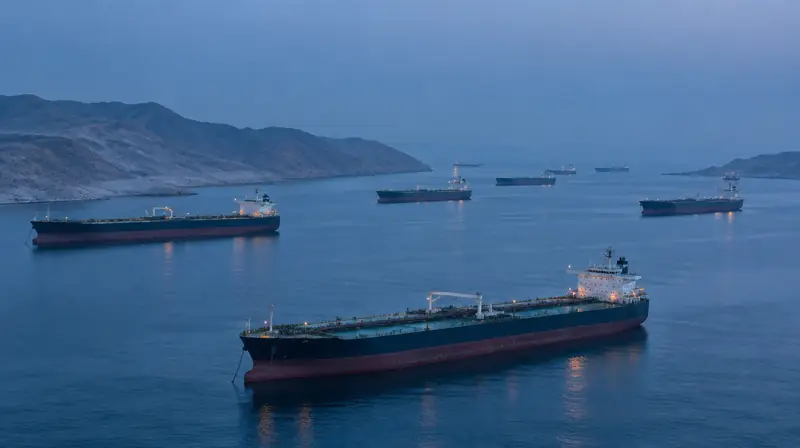
The Strait has been shut to normal commercial traffic since 28 February. The first shock was price. The lasting change is in routes, contracts and inventories.
The Strait of Hormuz normally carries about 20 million barrels a day of crude and petroleum liquids, roughly a fifth of world consumption. Since 28 February 2026 it has been effectively closed to ordinary commercial shipping. In early November, IMF PortWatch was still counting daily transits in single figures against a pre-crisis norm of around 85.
The price shock came first
Brent passed US$100 a barrel on 12 March and the spot price reached US$126.69 on 31 March, the largest monthly rise on record. Prices have since eased: Brent traded between about US$93 and US$98 in mid-November. That is far below the peak and still well above the level before the crisis.
The structural change came after
Three things have outlasted the spike. First, routes: Gulf exporters with pipeline access to ports outside the Strait have used it to the limit, and buyers in Asia and Europe have turned to the Atlantic basin. Second, contracts: force majeure, war risk and deviation clauses that were once boilerplate are now negotiated line by line. Third, inventories: importers that ran lean stocks in 2025 are paying to hold more.
Rotterdam shows the rerouting in its numbers. Oil and oil products throughput rose 4.7% in the first half of 2026 while the port’s total volume was flat.
What to watch
Diplomacy has not yet produced an agreement to reopen the Strait. For commodity companies the planning question is no longer when it reopens but which of the new arrangements they would keep if it did.
- 2026 Strait of Hormuz crisis: timeline
- Straits daily brief, 16 November 2026 (IMF PortWatch transit counts)
- US Energy Information Administration: crude prices in the first quarter of 2026
- Brent and WTI in March 2026, EIA spot assessments
- Port Technology: Port of Rotterdam first-half 2026 throughput
This article is general market commentary and not investment, legal or tax advice. Figures are as reported by the sources on the date of publication.